Helen's goal list
Happiness for BeginnersHelen Carpenter’s goal list is a private paper of self-improvement aims that becomes, by accident, a public test of environmental discipline and personal exposure. Lost on the trail and mistaken for litter, it is read aloud and burned by Beckett; afterward, Jake offers Helen a poem as its replacement, shifting the object’s story from humiliation toward a quieter uncertainty about what she might keep.
Form and Purpose
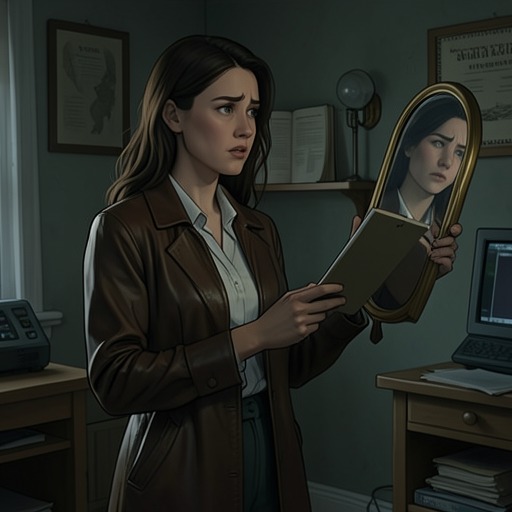
The list is a physical paper Helen has been carrying around in her bra. Its contents set out aspirations rather than immediate tasks: she wants “To gasp at the raw power and beauty of nature,” “To fall to my knees in awe of the magic of the world,” and “To become a part of something so much larger than myself.” The aims frame her hoped-for response to the wilderness as a combination of attention, awe, and belonging. They are wishes for a change in how she experiences the world, not a record of achievements already completed.
Helen later refers to the paper as her list of self-improvements. The evidence does not specify when she wrote it, but it establishes that she had carried it through the journey and kept it close to her body. That intimacy makes its accidental loss more consequential than the loss of an ordinary scrap: the paper holds a private account of what she hoped to become, and she is not ready to share it.
Accidental Exposure
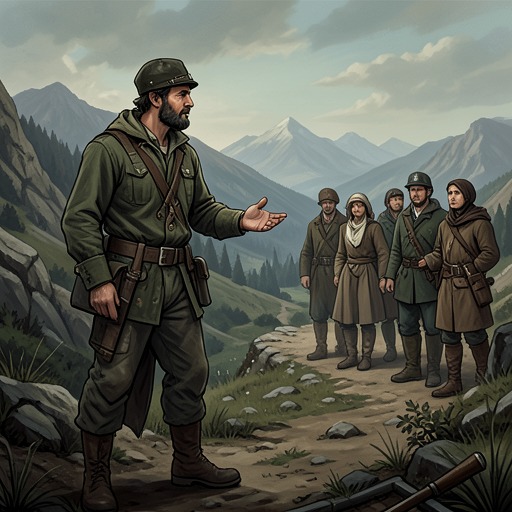
The list comes into view as a white square on the ground, visually jarring against its surroundings. Beckett sees it, removes his pack, picks up the paper, and treats it as litter. His reaction follows the group’s Leave No Trace instruction: he rebukes the hikers for leaving detritus behind and asks who will claim the paper. Helen recognizes it as hers and starts toward him, intending to explain that she lost it rather than discarded it.
Before she can speak, Beckett unfolds the paper and reads its aspirations aloud. Some of the larger hikers laugh and snort, while Beckett remains serious and again asks whether anyone will claim it. The difference between Helen’s private intentions and the group’s reaction becomes immediate: words meant to express wonder at nature now draw amusement in front of the people traveling with her. Helen stays perfectly still. She is grateful that she cut her name from the top of the list long before the journey, so its contents are exposed without being formally identified as hers.
The paper’s mistaken status matters. Helen has not intentionally violated the litter rule; she has lost something she meant to keep. Yet, from the group’s perspective, the square on the ground is visible litter, and Beckett responds to what he sees rather than to Helen’s unspoken explanation. The list therefore draws private vulnerability into a public scene organized around accountability and respect for the natural setting.
Burning and Loss
Beckett invokes his warning from the first day that littering would make him go insane. He takes out the propane lighter used for the cookstoves, holds it in one hand and Helen’s list in the other, and gives the group another chance to claim the paper. Nobody does. Without saying anything more, he sets it alight.
The destruction is deliberate, but controlled: Beckett lets the paper burn nearly to his fingers, drops it, stamps out the fire with his boot, picks up the remaining corner, and puts that fragment in his pocket. He then reiterates that the world is not a garbage dump and threatens to scorch the earth if the behavior happens again, before whistling for the first group of hikers and leading them down the trail. The list is thus not merely misplaced and recovered; its main body is destroyed as part of Beckett’s emphatic enforcement of the group’s environmental rule.
Afterward, Jake identifies the paper as the list Helen kept in her bra. She does not explain how he knew; she shrugs and says it is time for a new list. The exchange confirms both the paper’s personal significance and the fact that its loss cannot simply be undone. Her response also marks a possible break with the old object, though the scene does not say what, if anything, she will write next.
Replacement and Significance
When Jake offers a folded paper as a present to replace the lost list, Helen asks what it is and learns that it is a poem. He promises it is hers if she will not read it. Helen agrees, although she admits inwardly that she does not even want it and is too surprised by the turn of events to protest. The new paper therefore has an opposite relation to disclosure: Beckett forced the list’s contents into the open, while Jake offers a poem whose contents are expressly to remain unread.
Jake’s parting remark that it can be nice to have something to hold on to leaves the replacement’s meaning unsettled. Helen calls after him to ask what he will hold on to, but the evidence provides no answer. The list’s destruction consequently leads not to a clear substitute for its aspirations, but to a different folded page and a question between them. As an object in the episode, the list moves from something Helen keeps hidden, to something displayed and judged, to ashes and a saved corner. That sequence makes its loss concrete while preserving the uncertainty of what Helen’s next list—or Jake’s unread poem—might mean.